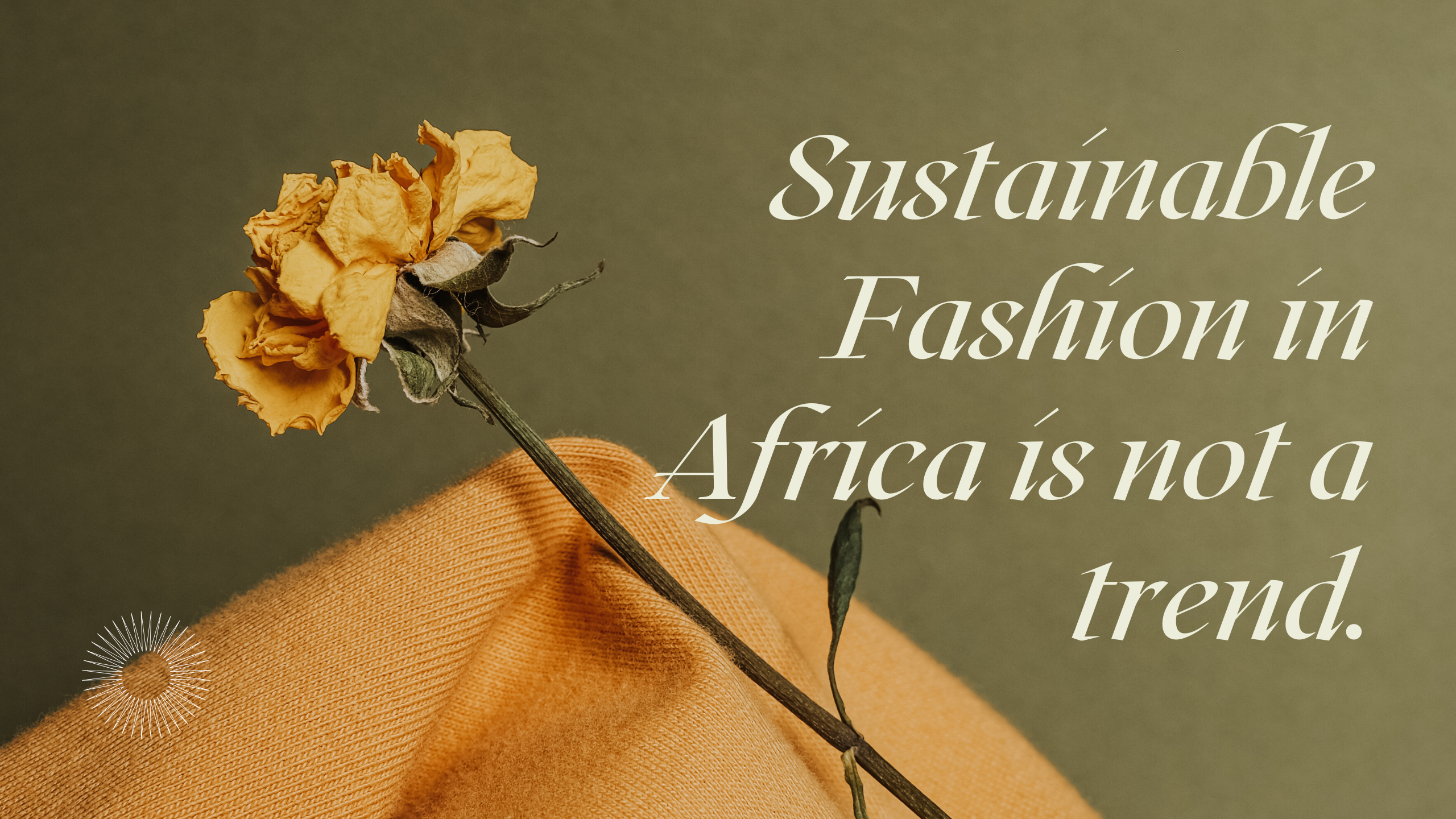
For many parts of the world, sustainable fashion is a relatively new conversation — one shaped by climate reports, overproduction, and the visible damage caused by fast fashion.
But in Africa, sustainability in fashion did not begin as a trend.
It has always been a way of life.
Long before “eco-conscious” became a marketing term, African communities practiced fashion rooted in intention, durability, and respect for resources. Clothes were made to last. Textiles carried meaning. Production was human, local, and deeply connected to culture.
Sustainability was not a response — it was the foundation.
Before Sustainability Had a Name
Across Africa, garments were traditionally woven, dyed, and sewn using locally sourced materials. Processes were slow, deliberate, and communal. Pieces were repaired, repurposed, and passed down rather than discarded.
This wasn’t driven by trends or external pressure.
It was driven by value.
Value for labour.
Value for materials.
Value for the story behind every piece.
In contrast to today’s global fashion system — which prioritises speed and volume — African fashion has always prioritised meaning.
The Problem With Calling It a “Trend”
When sustainability is treated as a trend, it becomes temporary.
Something to be adopted, marketed, and eventually replaced.
But African sustainable fashion is not seasonal. It is cultural.
Labelling it a trend risks erasing generations of knowledge, craftsmanship, and innovation that existed long before Western fashion systems began questioning their impact.
Africa does not need to “catch up” to sustainability.
The world needs to listen.
Textiles as Leadership, Not Aesthetic
Fabrics like Aso Oke, Kente, Akwete, and Adire are often admired for their beauty — but their deeper value lies in how they are made.
Handwoven.
Low waste.
Community-based.
Designed for longevity.
These textiles represent a fashion system that centres people, not just profit. They are examples of sustainability as leadership, not performance.
Why This Conversation Matters Now
As sustainability becomes increasingly commercialized, there is a risk that African fashion will be included only as inspiration — not as authority.
This platform exists to challenge that.
Sustainable Fashion Africa is about reclaiming the narrative, spotlighting indigenous systems, and recognising African fashion as a blueprint for a more responsible global industry.
This is not nostalgia.
It is strategy.
It is leadership.
Moving Forward With Intention
Sustainability is not about perfection.
It is about awareness, accountability, and continuity.
Africa’s fashion story deserves to be told with depth, context, and respect — not reduced to hashtags or trends.
This is the beginning of that conversation.
Join the Conversation
Subscribe to receive thoughtful insights, textile stories, and perspectives on sustainable fashion from an African lens.
Because sustainability did not start elsewhere — it has always lived here.